
In-Car Training: What to Expect from Your First Driving Lesson in Texas

Your first time behind the wheel is a milestone you’ll remember. Whether you’re a teen starting the parent-taught program or an adult learning to drive for the first time, knowing what to expect makes that first lesson less intimidating and more productive.
In-car training transforms classroom knowledge into real driving skills. You’ve studied traffic laws and road signs—now it’s time to apply that knowledge with your hands on the steering wheel and your eyes on the road.
Virtual Drive of Texas has guided thousands of new drivers through this transition since 2004. Our Parent-Taught Driver Education course includes comprehensive in-car training materials that give both students and parent instructors the structure they need for successful lessons. This guide prepares you for what’s ahead so you can approach your first driving lesson with confidence.
What Is In-Car Training in Texas?
In-car training is the hands-on driving portion of driver education, where you practice actual vehicle operation under supervision. In Texas, teen drivers must complete 44 hours of behind-the-wheel practice, including at least 10 hours of nighttime driving, before qualifying for their provisional license.
This training complements the 24 hours of online classroom instruction required for Texas teens. While the classroom teaches you the rules of the road, in-car training develops the physical skills and judgment needed to apply those rules safely.
For parent-taught driver education, a parent or guardian serves as the driving instructor. Texas law requires the parent instructor to be a licensed driver with at least one year of driving experience. The parent uses structured lesson guides and driving logs to ensure comprehensive skill development.
Virtual Drive’s Parent-Taught Driver Education course includes detailed in-car training materials that guide parents through each lesson. These materials transform nervous parents into effective instructors by providing clear objectives, teaching techniques, and skill progressions.
Adult new drivers also benefit from structured in-car practice, though Texas doesn’t mandate specific hours for drivers 18 and older. Whether practicing with a friend, family member, or professional instructor, the same fundamental skills apply.
What to Expect During Your First Driving Lesson
Your first lesson focuses on the basics—getting comfortable in the driver’s seat and understanding vehicle controls before you drive anywhere.
Before You Start the Car:
Your instructor will walk you through the cockpit drill: adjusting your seat so you can reach the pedals comfortably while maintaining a clear view of the road; positioning mirrors to eliminate blind spots; and familiarizing yourself with the location of turn signals, headlights, windshield wipers, and emergency flashers.
Take time with these adjustments. Proper positioning prevents fatigue and ensures you can operate all controls without taking your eyes off the road. Your instructor won’t rush this process.
Understanding Vehicle Controls:
Before moving, you’ll learn the feel of the brake and gas pedals. Many instructors have you practice pressing each pedal with the car in park so you understand how much pressure each requires. The brake pedal responds to light pressure; the gas pedal requires gentle, gradual input.
You’ll also learn how the gear selector works (Park, Reverse, Neutral, Drive) and practice engaging the parking brake.
Your First Movement:
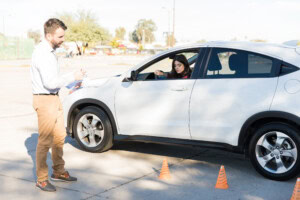
Most first lessons take place in an empty parking lot, away from traffic and pedestrians. This controlled environment allows you to focus on basic vehicle operation without the distractions of other cars.
Your first movements will be simple: release the parking brake, shift into drive, ease off the brake to let the car creep forward, then gently brake to a stop. You’ll repeat this sequence multiple times, building muscle memory for smooth starts and stops.
Steering Practice:
Once you’re comfortable with basic movement, you’ll practice steering—making wide turns, driving in straight lines, and navigating around obstacles like parking lot light poles. These exercises develop the hand-eye coordination essential for safe driving.
What Your Instructor Provides:
A good instructor—whether a parent or professional—provides calm, clear directions and constructive feedback. They’ll guide you through each step, explain what you’re doing well, and help you correct mistakes without creating anxiety.
Virtual Drive’s Parents’ Guide to Teaching Driver Education helps parent instructors create a supportive environment.

Preparing for Your First Lesson
Proper preparation makes your first driving lesson more productive and less stressful.
Make sure you have your learner’s permit. Texas requires teen drivers to obtain an instruction permit before any behind-the-wheel practice on public roads. Check out our Texas Teen Learners’ Permit Info Page and enroll in this short 6-hour online permit class.
Wear comfortable clothing and shoes. Avoid flip-flops, high heels, or bulky boots that interfere with pedal feel. Flat-soled shoes give you the best control. Dress comfortably—you want to focus on driving, not on adjusting your clothes.
Bring any required documents. Have your learner’s permit and your driver education enrollment confirmation available. Your parent instructor should have their license, the vehicle’s registration, and insurance documentation.
Review basic controls beforehand. If possible, sit in the driver’s seat while parked and locate all controls before your lesson. Familiarity reduces anxiety when it’s time to actually drive.
Get enough rest. Fatigue affects concentration and reaction time. A well-rested learner absorbs information better and responds more quickly to instruction.
Prepare mentally. It’s completely normal to feel nervous. Every licensed driver once sat where you are, feeling the same uncertainty. Trust that your instructor will guide you through each step, and remember that mistakes are part of learning.
Building Skills Through Progressive Practice
In-car training follows a logical progression from simple to complex skills. Understanding this progression helps you appreciate the purpose of each lesson.
Stage 1: Parking Lot Basics
Your first several lessons focus on vehicle control in controlled environments. You’ll master starting, stopping, steering, backing up, and parking before encountering traffic.
Stage 2: Residential Streets
Once basic control becomes comfortable, you’ll move to quiet neighborhood streets with light traffic. Here you’ll practice stopping at signs, making turns, and maintaining lane position while scanning for hazards.
Stage 3: Busier Roads
As confidence grows, you’ll encounter more traffic, faster speeds, and more complex intersections. You’ll learn lane changes, merging, and navigating traffic signals.
Stage 4: Highway Driving
Higher speeds require earlier planning and smoother inputs. Highway lessons cover merging, maintaining speed in traffic, and making safe lane changes at speed.
Stage 5: Challenging Conditions
Your 44 hours must include at least 10 hours of nighttime driving. You’ll also want to practice in rain and heavy traffic to prepare for real-world conditions.
Use a driving log to track your practice hours accurately. Texas DPS requires this documentation when you apply for your provisional license.

Tips for a Successful First Lesson
Whether you’re the student or the instructor, these strategies help make your first lesson productive.
For New Drivers:
Listen carefully to instructions before acting. Ask questions when you don’t understand something. Stay relaxed—tension in your hands and arms makes steering harder. Focus on one skill at a time rather than worrying about everything at once. Celebrate small victories; every new skill mastered is progress.
For Parent Instructors:
Stay calm, even when mistakes happen. Use clear, specific directions rather than vague guidance. Praise effort and improvement, not just perfection. If frustration builds, take a break. Remember that your calm demeanor directly affects your teen’s ability to learn.
Virtual Drive’s in-car course materials provide structured lesson plans that take the guesswork out of teaching. Following these guides ensures you cover all necessary skills in an appropriate sequence.
Conclusion
Your first driving lesson marks the beginning of a journey toward independence and responsibility. With proper preparation, realistic expectations, and patient instruction, that first lesson becomes the foundation for a lifetime of safe driving.
Every skilled driver started exactly where you are—nervous, uncertain, and learning one small skill at a time. Trust the process, celebrate your progress, and remember that confidence grows alongside competence.
Virtual Drive of Texas provides everything you need for successful in-car training. Our Parent-Taught Driver Education course includes detailed instructor guides, skill progression outlines, and all the support materials that transform practice hours into genuine driving ability.

Get Started with Virtual Drive of Texas
Teens Ages 14-17:
Enroll in Parent-Taught Driver’s Ed – Get everything you need for successful in-car training: 24 hours of online instruction, comprehensive parent teaching materials, integrated DPS written test, and ITTD certification—just $59.95 (regularly $99.95).
Prefer Professional Instruction?
24-Hour Instructor-Led Course – Our instructor-led option provides professional behind-the-wheel training with certified instructors. Just $99.95 (regularly $119.95).
Essential Resources:
- Parents’ Guide to Teaching Driver Education
- In-Car Course Details
- Texas Learner’s Permit Guide
- Parent-Taught Driver’s Ed Log Sheet
- Download the Texas Driver’s Handbook
Questions About In-Car Training? Contact our Texas-based support team at (833) 3-VDRIVE. We’ve helped thousands of Texas families navigate driver education, and we’re here to support your journey, too.